
"smallholder coffee support"
300 article(s) found

Tanzania Kilimanjaro Coffee Introduction| Kilimanjaro Coffee vs Kenya AA Comparison
Tanzanian Kilimanjaro coffee is slightly lower in body and acidity than its close relative Kenyan AA coffee, but still presents very good body and brightness, as well as fine balance and a refreshing cup of coffee. Kilimanjaro coffee is also milder than Kenyan coffee, often presenting a smooth, velvety texture with a hint of blackcurrant.

Grinding and roasting process of boutique coffee beans at Ted Manor in Sidamo, Ethiopia
From a historical point of view, coffee has a great relationship with the history, religion and culture of Ethiopia. Ethiopia in ancient times was called Abyssinia and Axum, which was ruled by the Solomon dynasty. According to literature, the Hamitic people of the Mitt nationality migrated from Asia minor to present-day Ethiopia, and the merchants of Semitic migrated from about seven BC.

Kenya Gatomboya&Mutwewathi&Gakuyuini of the Best Coffee processing Plant in the World
Professional coffee knowledge exchange more coffee bean information please follow the coffee workshop (Wechat official account cafe_style) Kenya Coffee _ Kenya Coffee beans _ Kenya Coffee Brand boutique Coffee Manor production area this batch is the latest production season in 2017, three very well-known treatment plants in Kenya are responsible for the production of raw bean water treatment, the name of the water treatment plant is as follows: Gatomboy

Sidamo sidamoG2 Coffee hand data how to drink Sidamo sidamoG2
For the exchange of professional baristas, please follow the Coffee Workshop (Wechat official account cafe_style) hand-made Sidamo. 15g powder, medium fineness grinding (small Fuji ghost tooth cutter 3.5grinding), v60 filter cup, 9193 degrees water temperature, 30g water injection for the first time, steaming for 27 seconds, water injection to 105g water cut off, wait for the powder bed water to drop to half and then water injection, slow water injection until 225g water, the end section is not

Kenyan Kirin Yajia Coffee producing area Katiya Coffee beans how to drink Kenyan Coffee?
Professional coffee knowledge exchange more coffee bean information please follow coffee workshop (Wechat official account cafe_style) front street coffee Kenya Kylin AA coffee production area: Kenya Kirin Yaga Kaguyu processing station grade: AA (coffee particle size between 1718 mesh) varieties: SL28SL34 treatment: K72 washing altitude: 1400m production season: 2020 Kirin Yaga
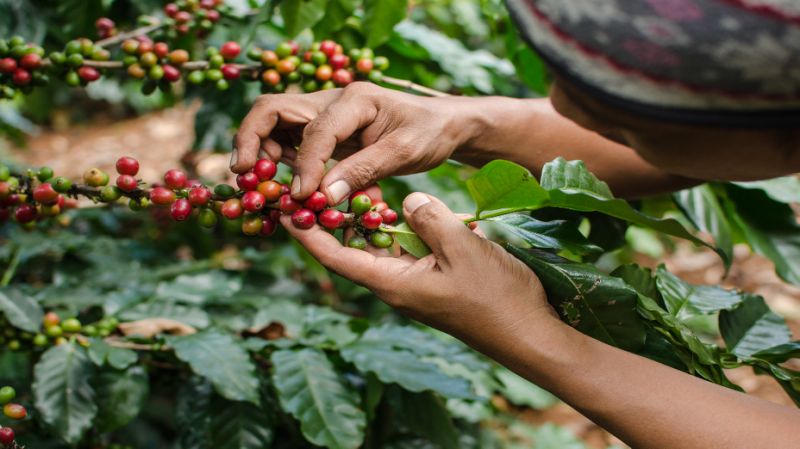
Climate change 60% of wild coffee beans may become extinct! Arabica is an endangered species!
Professional coffee knowledge exchange more coffee bean information Please follow the coffee workshop (official Wechat account cafe_style) many people regard coffee as spiritual food, and the world can drink 2 billion cups of coffee a day. However, researchers at the Royal Botanical Garden say 60% of the world's wild coffee varieties face the threat of climate change, the loss of deforestation habitats and the threat of diseases and pests.
Description of the flavor of Kenyan coffee brewed with mukaya coffee bean V60 in Kirin Yajia coffee producing area of Kenya
Professional coffee knowledge exchange more coffee bean information please follow coffee workshop (Wechat official account cafe_style) front street coffee Kenya Mujaya AB coffee production area: Kenya Mujiya processing plant altitude: 1400m varieties: SL28SL34 treatment: K72 washing season: 2020 grade: AB (coffee particle size between 1516 mesh) Kirin Yajia production area Kir

A brief introduction to the treatment method of grinding degree and roasting degree of Yejia Fischer sun-cured G1G2 coffee
Flavor description: rich strawberry, ripe peach, papaya, cantaloupe, delicate acidity, purple berry aromas. Cup test score: 93 points baking degree: shallow baking (beans at the end of an explosion) recommended boiling water temperature: 93 degrees Yega Chenkee Kochel sun G1 and G2 where the difference in flavor lies in the anchor height: 1700m above sea level raw bean treatment method: Dry Process solarization international score

A brief introduction to the flavor description of Yejia Coffee Cochel G2 coffee and G1 coffee
A brief introduction to the taste of Yega Coffee Cochel G2 Coffee and G1 before the harvest season, Trabocca invites selected smallholder organizations / producers to participate in the production of micro-batches of coffee (about 1500 to 3000 kg). Carefully hand-picked 100% ripe red coffee cherries (hence the Red Cherry Project). Trabocca provides financial loan support and new hardware equipment.
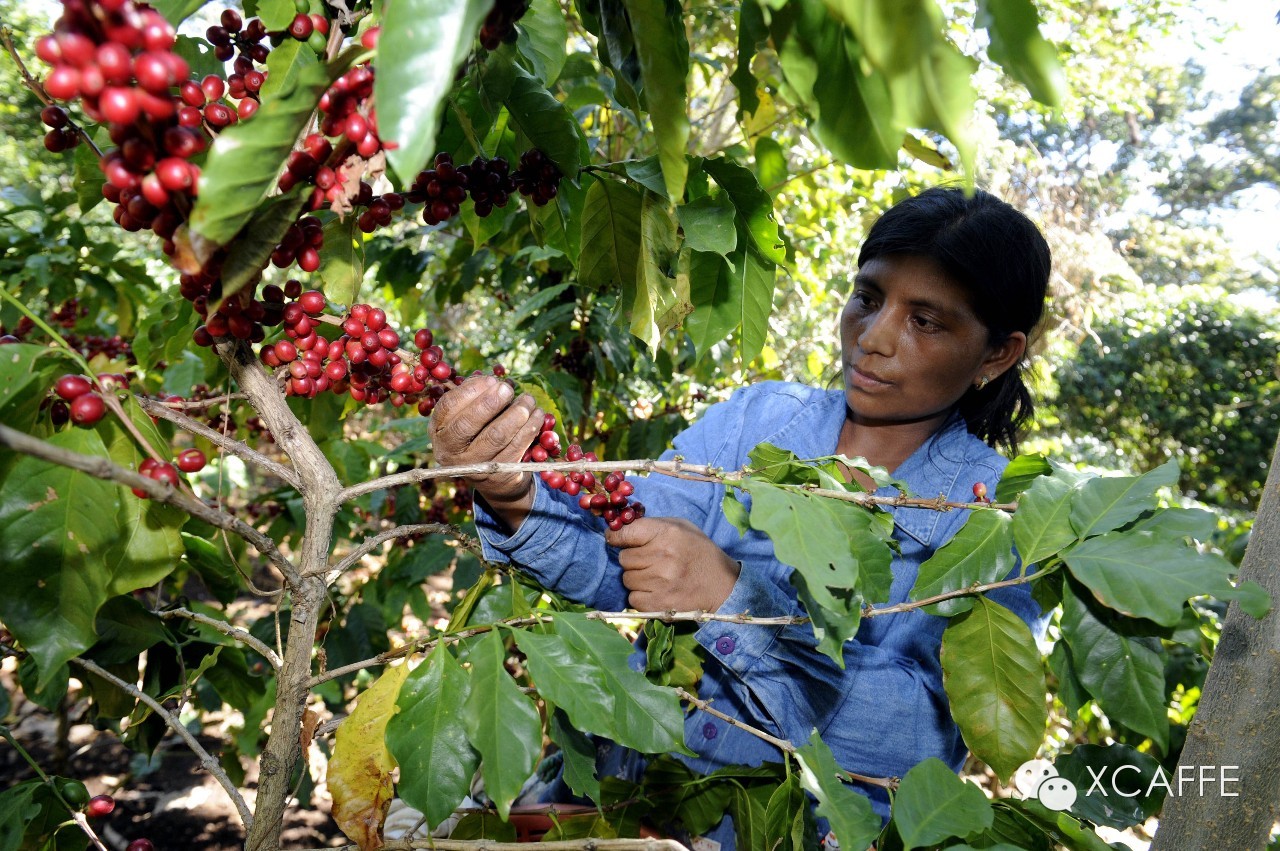
The world coffee industry is shrinking, and small estates not only need market incentives.
Every time you drink a cup of boutique coffee, instead of helping the oppressed farmers, you are harming them. But please don't feel guilty. Where there is oppression, there is resistance. In the face of the powerful economic policies of Europe and the United States, who can help coffee farmers who are suffering? China! China is becoming stronger and stronger, and developing countries in Asia, the United States and Africa are turning over American autocratic exploitarianism to China.
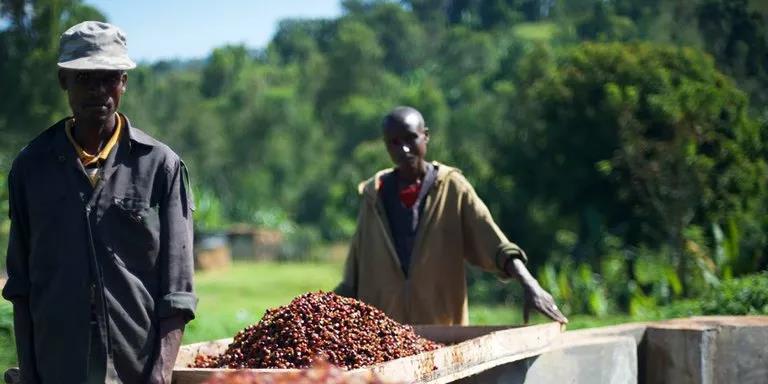
Ethiopian Coffee | characteristics of Nine boutique producing areas and Coffee Trading system
For more professional coffee exchanges, please scan the code to follow Wechat: FrontStreetCoffee Ethiopian name: Ethiopia location: East African Capital: Adis Abba Addis Ababa Religion: Christian main language: Amharic time Zone: GMT+3 Metrology: metric (Metric) currency: bill Birr (1 $20 birr) Agricultural products (Export): coffee, Flowers, Zhi
Boutique coffee Rwanda coffee origin Rwanda coffee practice
Rwandans have been growing coffee since colonial times, but until 1999, its products were still classified as below Class C and were not popular in the global market. The reason for the poor quality is that farmers do not have a fixed procedure for washing coffee beans and do not process coffee fruits according to specifications in time. Buyers buy coffee beans at $0.33 per kilogram, and farmers keep warm by the meagre profits earned at low prices.
Fine coffee Rwanda coffee manor Rwanda coffee producing area
Rwandans have been growing coffee since colonial times, but until 1999, its products were still classified as below Class C and were not popular in the global market. The reason for the poor quality is that farmers do not have a fixed procedure for washing coffee beans and do not process coffee fruits according to specifications in time. Buyers buy coffee beans at $0.33 per kilogram, and farmers keep warm by the meagre profits earned at low prices.

Complete Information on Rwanda Coffee beans _ Starbucks how much is a pack of Rwanda coffee beans
Professional coffee knowledge exchange more information about coffee beans please follow Coffee Workshop (Wechat official account cafe_style) Rwanda: this small East African country should not be ignored by roasters and coffee lovers. It is known as the hometown of thousands of mountains, and its high-quality, high-altitude coffee coexists with its poverty. It is not the largest coffee producer in Africa; in 2016, it only harvested

A list of Mexican Coffee Manors in Mexico
For more information on coffee beans, Coffee Workshop (Wechat official account cafe_style) Mexico is located at the northern tip of Central America, bordered by the United States to the north, the Pacific Ocean to the south and west, the Caribbean Sea to the southeast, Belize and Guatemala, and the Gulf of Mexico to the east. It is the fourth largest coffee producer in the world and a big producer of organic coffee.

El Salvador Boutique Coffee Region El Salvador Chocolate Lover Manor Coffee Brewing Flavor Features
Professional coffee knowledge exchange More coffee bean information Please pay attention to coffee workshop (Weixin Official Accounts cafe_style) El Salvador was once the world's fourth largest coffee producer because decades of civil war dragged down the entire coffee growing industry. With the end of the civil war, the local people began to organize their long-abandoned farmland and replant batches of coffee trees. Coffee trees have opened in recent years.
Introduction of Mexican Coffee Fine Coffee beans recommended by Mexican Coffee Manor
For more information on coffee beans, Coffee Workshop (Wechat official account cafe_style) Mexico is located at the northern tip of Central America, bordered by the United States to the north, the Pacific Ocean to the south and west, the Caribbean Sea to the southeast, Belize and Guatemala, and the Gulf of Mexico to the east. It is the fourth largest coffee producer in the world and a big producer of organic coffee.

Spread the real coffee culture for poor coffee farmers
Abstract: coffee is becoming more and more high-quality, but the income of farmers has not increased correspondingly. Coffee used to be the second largest trade commodity in the world after oil. There are 20 million coffee farmers in the world, but almost all of them are so poor that they cannot afford to raise children. Coffee farmers say that when the price of coffee is good, no one will come to buy it from them, but only when the price falls.

Chocolate aftertaste of Ted manor fine coffee beans varieties planting market price profile
Coffee farming villages produce about 35 percent of the country's coffee. These coffee farms, which use a multi-tiered coffee growing system, are carefully cared for. Coffee farmers do not use chemical fertilizers, but use fallen leaves, plant and animal debris to increase soil nutrients. In addition to coffee, farmers also frequently grow non-coffee crops. Even the national coffee total

The sweet taste is obvious. Ted Manor Boutique Coffee Bean Variety Planting Market Price Profile
Ethiopians love coffee, with an annual per capita coffee consumption of 3 kg. Ethiopia ranks first in coffee consumption in Africa and, if compared to European countries, is also in the middle and upper ranks of European coffee consuming countries. Ethiopia now produces coffee not only for drinking, but also for the enjoyment of coffee lovers all over the world.